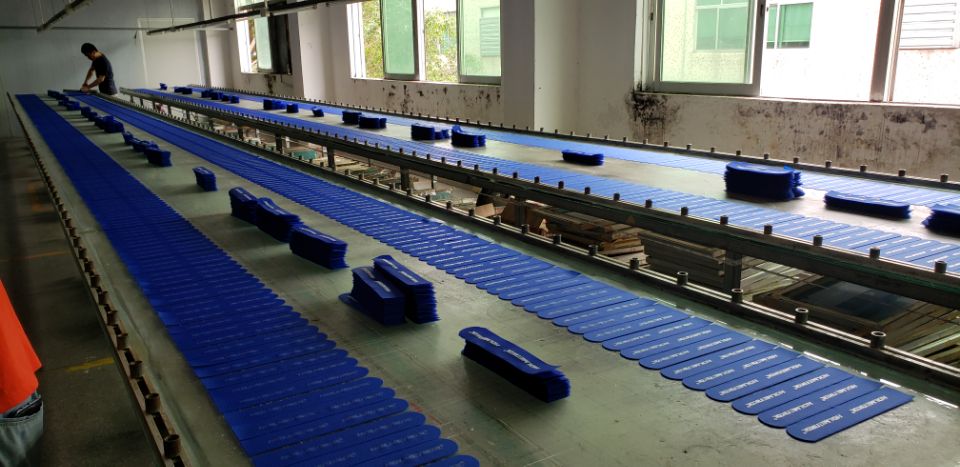
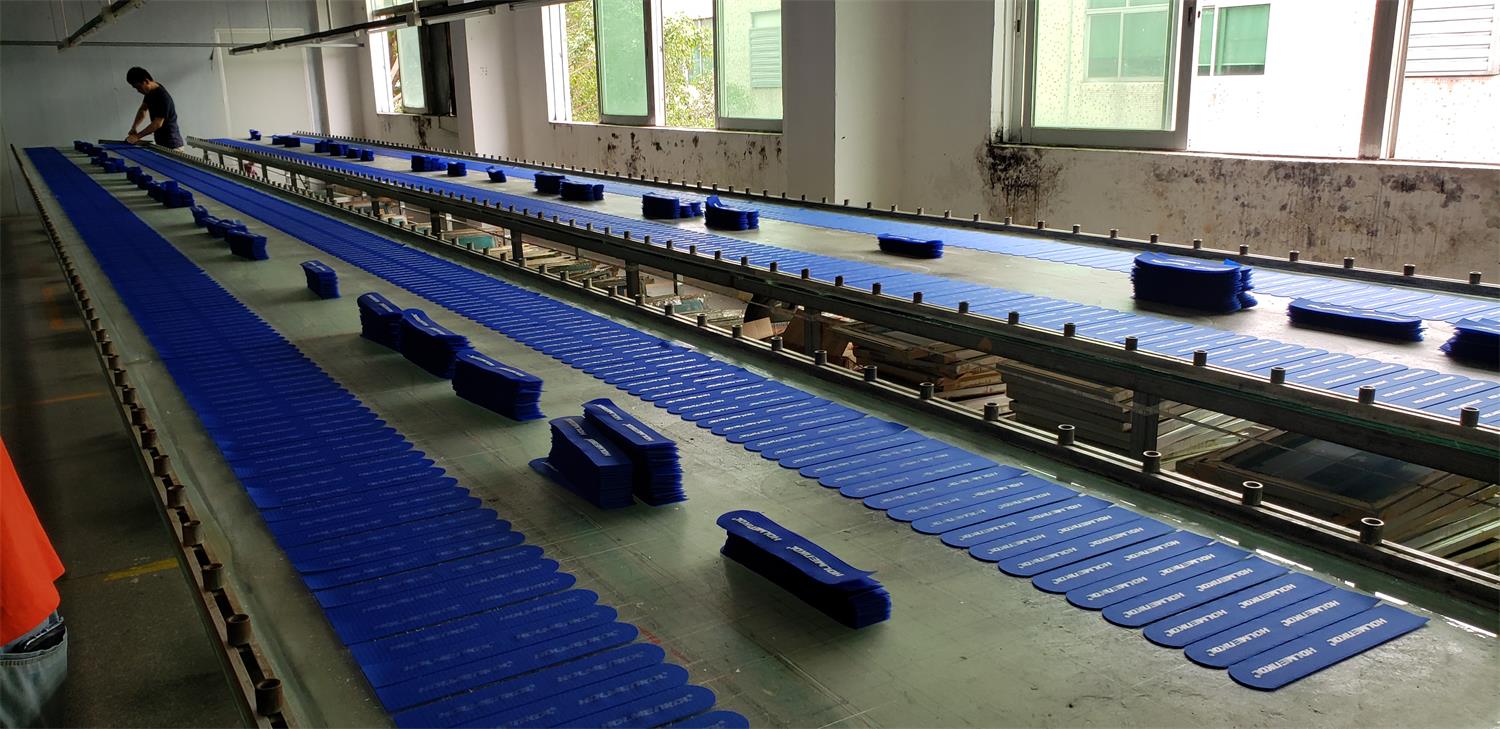
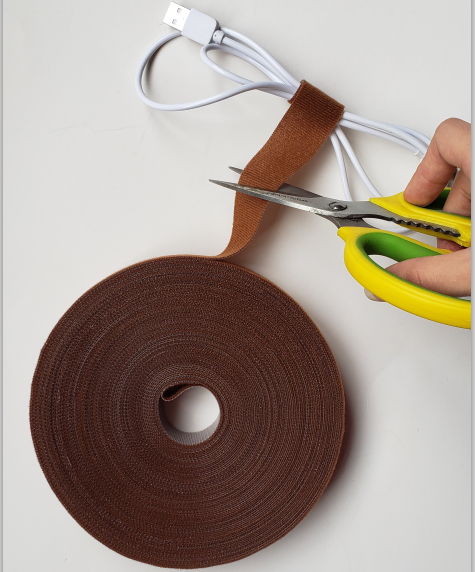
A ski strap is a small, low-cost accessory, which is why the closure decision gets rushed. The buyer signs off webbing width and print, and the closure is left to whoever builds the sample, yet the closure is the part the customer actually touches, with a glove on, on a windy lift line. These are the decisions that sit inside a hook and loop closure on a ski strap.
The webbing wraps the skis and the closure holds the tension the user pulled, so load runs along the strap and the closure mostly sees shear: the two faces slide against each other and the whole overlap shares the work. The difficult moment is elsewhere. Lifting a corner of the tab to open the strap applies peel at one edge, and that same edge is where snow and grit collect when the strap is carried loose in a pack. Design for shear, then inspect peel at the corner people grab.
For a rental fleet handled by many different people, the two-piece tab is usually the more serviceable construction. For a retail strap closed once and left alone, the fold-over is simpler to control in production.
Loop outward, hook inward, wherever the design allows. Hook tape facing out collects snow, lint and knitwear fibres, and once that face is contaminated the gripping area drops and the user cannot wipe it back. Loop outward also stops the strap snagging other gear in a bag and lies flatter against a ski. If the product needs hook outward, shorten the hook field and leave a generous loop landing zone.
Stitch the perimeter of the tape, not only the two ends: a perimeter run resists edge peel and stops the panel skewing under tension. Ask the seam to stop just inside the tape corner and to finish the thread tail inside the seam. Seal the webbing end with a hot knife or an ultrasonic cut, because a raw end frays within a season on a ski rack.
Photographs will not tell you whether a closure works with gloves on. Close and open the sample repeatedly with a winter glove, on a cold surface, and check three things: the tab lifts from a corner rather than the middle, the overlap lands on the marked stitch line, and the strap does not twist when tensioned. Mark the failures on the sample itself and return it with the specification rather than describing them in an email.
If you are developing a ski strap or a private-label strap programme and want the closure, webbing and stitching reviewed before tooling starts, send your drawing and the intended use through /contact-us/ and our team will come back with the construction options and the points to approve on the first sample.

subscribe