A ski strap is bought on two criteria: does it hold the skis together, and does it still hold them after a season in a cold van. The closure decision — hook and loop tab versus cam buckle — decides both, and it is usually made last, after the webbing and the print.
Both closures work. They fail differently, and they suit different products. Here is what actually changes on the snow.
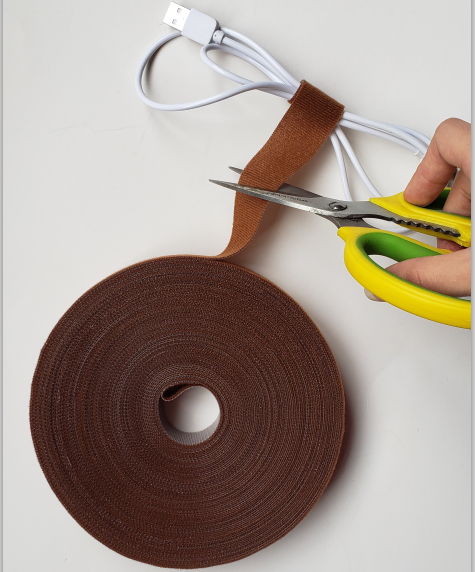
A hook and loop tab holds by shear: the hook face and the loop face engage over an area, and load is carried across that area. The more overlap, the more holding force — up to the point where the tab becomes stiff and awkward to close with gloves on.
A cam buckle holds by clamping: a spring-loaded cam bites the webbing against a frame. Tension is set by pulling the free end through, and the cam holds whatever tension was applied. It is a point load at the cam, not a distributed one.
If the product is used at a resort with a chairlift and a warm lodge, hook and loop wins on speed. If it is used to lash a load that must not move — a rack, a sled, a trailer — the cam buckle wins on repeatability.
The cam is the harsher of the two. Every closure pinches the same zone of webbing, which glazes and thins over time; a worn cam will eventually slip on a polished section of strap. Specifying a tighter weave and a slightly thicker webbing at the cam zone extends life more than increasing the cam spring force.
Hook and loop is gentler on the webbing but depends on the loop face staying clean. Once the loop face pills or fills with fibre, holding force drops and no amount of pulling restores it. That is a wear-out mode, not a failure — worth stating in the product copy.
No. It holds tension more predictably, but strength depends on the webbing, the stitching and the frame, not the closure alone. Test the assembly, not the component.
Rarely. Roof loads see vibration and wind buffeting; a cam or ratchet holds tension through both, while a hook and loop tab gradually releases under cyclic load.
Hook and loop, at most volumes — no metal part, no spring, simpler assembly. The gap narrows once you add a reinforced tab and a bound edge.
If you are choosing between the two for a new strap, send us the use case and the load: sales@straphookloop.com, or WhatsApp +86 134 80606826. We will tell you which closure the application actually supports.

subscribe